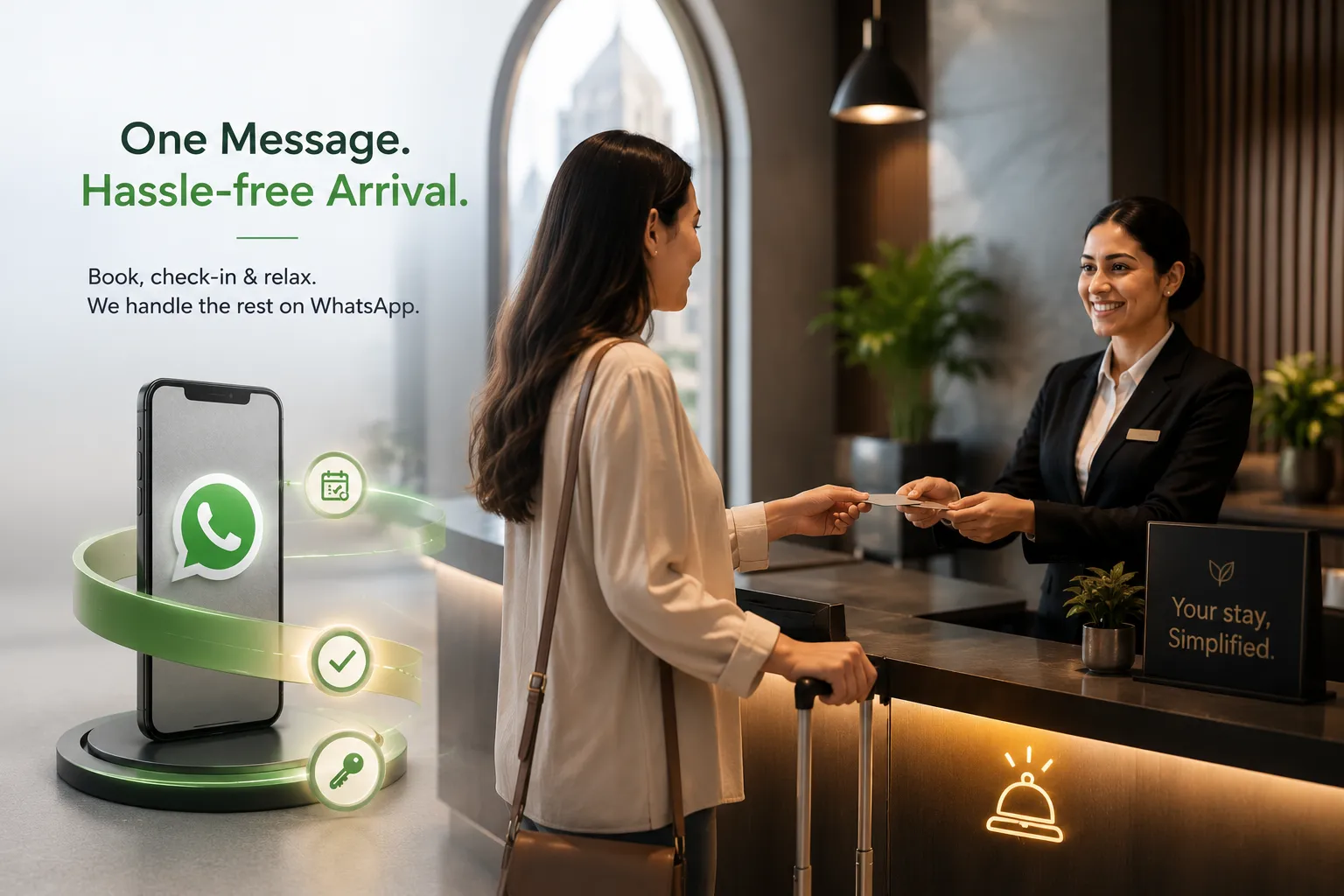
Modern Guests Don’t Want to “Wait for Hospitality” Anymore
The definition of a good hotel experience has changed dramatically.
Guests still care about:
- Comfort
- Service
- Cleanliness
- Personalization
But increasingly, they also expect:
- Instant Communication
- Faster Check-ins
- Real-time Updates
- Smooth Digital Experiences
After a long journey, even a 15-minute delay at reception feels frustrating.
And for hotels, those delays create operational pressure that spreads across the property:
- Crowded Lobbies
- Stressed Front Desk Teams
- Delayed Housekeeping Coordination
- Slower Room Allocation
- Lower Guest Satisfaction
This is why hotels are increasingly turning toward automation not to remove hospitality, but to remove friction around it.
The Real Problem Isn’t Check-In, It’s Operational Disconnect
Most hotels already have hardworking teams.
The issue is usually not effort.
The issue is that operations are still heavily manual and disconnected.
- A Room May Already Be Cleaned, But Reception Hasn’t Received The Update Yet.
- A Guest May Already Have Completed Payment, But Staff Still Manually Verify Details At The Desk.
- Housekeeping, Front Office, Reservations, And Guest Communication Systems Often Operate Separately.
That disconnect creates delays guests immediately feel.
Why Guests Expect Faster Experiences Today
Traveler behavior has shifted rapidly toward mobile-first convenience.
People are used to:
- Checking Into Flights Digitally
- Tracking Deliveries In Real Time
- Messaging Businesses Instantly
- Completing Payments Online
Naturally, they now expect hotels to work similarly.
Recent hospitality research shows:
| Guest Behavior Trend | Data |
|---|---|
| Guests preferring mobile check-in | 73% |
| Travelers willing to skip front desk interactions | 70% |
| Guests preferring messaging over calls | 89% |
| WhatsApp/Text message open rates | 98% |
Hotels that continue relying entirely on manual coordination often struggle to meet these evolving expectations.
Step 1: Automate Pre-Arrival Communication
The guest experience should begin before arrival.
Hotels can automatically send:
- Booking Confirmations
- Payment Reminders
- Hotel Directions
- ID Upload Links
- Check-in Instructions
through WhatsApp or SMS immediately after booking.
This reduces confusion and significantly decreases front desk workload during arrival hours.
It also creates a smoother, more professional first impression.
Step 2: Enable Digital Guest Registration
One of the biggest causes of reception bottlenecks is manual paperwork.
Guests repeatedly filling:
- ID Details
- Signatures
- Registration Forms
- Payment Confirmations
creates unnecessary waiting.
Hotels using digital check-in systems allow guests to complete these steps beforehand through mobile devices.
That means guests arrive ready to collect keys instead of standing in queues.
Step 3: Use AI-Powered Guest Communication
Most guest queries during arrival are repetitive:
- “Is My Room Ready?”
- “Can I Check In Early?”
- “Where Is Parking?”
- “What Documents Are Needed?”
AI-powered WhatsApp automation can answer these instantly 24/7.
This helps hotels:
- Reduce Missed Inquiries
- Lower Front Desk Pressure
- Improve Guest Satisfaction
- Maintain Response Consistency
Research shows hotels using automated messaging systems significantly reduce average response time.
| Operational Area | Average Improvement |
|---|---|
| Guest response time | Reduced from 47 mins to under 2 mins |
| Front desk workload | Reduced by 20–40% |
| Guest inquiries resolved automatically | 55–65% |
Step 4: Create Real-Time Room Visibility
This is where many hotels still struggle operationally.
Housekeeping may clean rooms quickly, but updates often move slowly between departments.
Without real-time visibility:
- Reception Delays Check-ins Unnecessarily
- Guests Wait Longer In The Lobby
- Staff Repeatedly Coordinate Manually
Automation platforms help hotels track:
- Room Cleaning Status
- Inspection Progress
- Maintenance Blocks
- Ready-to-check-in Inventory
in real time.
This improves room allocation speed significantly.
Step 5: Optimize Room Turnover Workflows
Room turnover is one of the most overlooked operational drivers in hospitality.
But turnover speed directly affects:
- Guest Wait Times
- Occupancy Utilization
- Early Check-in Flexibility
- Operational Efficiency
- Review Scores
Hotels with slow turnover coordination often experience operational bottlenecks throughout the day.
Why Room Turnover Delays Usually Happen
The problem is rarely housekeeping speed alone.
The bigger issue is workflow coordination.
Many hotels still rely on:
- Manual Calls Between Teams
- Spreadsheets
- Delayed Room Updates
- Fragmented Operational Systems
This creates communication gaps between:
- Housekeeping
- Maintenance
- Reception
- Reservations
Even a small delay in updates affects guest flow significantly.
What Optimized Turnover Operations Look Like
In a connected operational workflow:
| Department | Automated Action |
|---|---|
| Guest checks out | PMS updates room status instantly |
| Housekeeping assigned automatically | Cleaning workflow triggered |
| Room inspected | Front desk notified in real time |
| Room ready | Guest arrival prioritized automatically |
Instead of teams manually coordinating every step, the workflow moves continuously.
That operational visibility creates faster room readiness and smoother guest experiences.
Automation Doesn’t Replace Hospitality, It Removes Operational Stress
One of the biggest misconceptions around hotel automation is that it removes the human side of service.
In reality, good automation gives hotel teams more time to focus on hospitality itself.
Instead of spending hours:
- Answering Repetitive Queries
- Chasing Room Updates
- Coordinating Manually
staff can focus more on:
- Personalized Service
- Guest Engagement
- Problem-solving
- Creating Memorable Experiences
The human side of hospitality becomes stronger when operations feel smoother behind the scenes.
Hotels Are Moving Toward Operational Intelligence
The future of hospitality is not simply “digital.”
It is connected.
Hotels are increasingly moving toward:
- AI-assisted Operations
- WhatsApp-first Communication
- Real-time Operational Coordination
- Predictive Guest Communication
- Mobile-first Guest Journeys
The goal is no longer just automation.
The goal is operational simplicity.
How Innhance Helps Hotels Simplify Guest Operations
Innhance helps hotels streamline guest communication and operational workflows using AI-powered hospitality automation.
The platform helps properties:
- Automate WhatsApp Guest Communication
- Reduce Missed Inquiries
- Improve Response Speed
- Simplify Operational Coordination
- Support Smoother Guest Journeys
Frequently Asked Questions
What is hotel check-in automation?
Hotel check-in automation helps simplify the arrival process using digital registration, AI-powered communication, and contactless workflows.
How does automation improve guest satisfaction?
Automation reduces waiting time, improves communication speed, and creates smoother guest experiences during arrival and throughout the stay.
Why is room turnover optimization important?
Faster room turnover improves occupancy efficiency, reduces guest wait times, and helps hotels manage operations more effectively during busy periods.
Does automation replace hotel staff?
No. Automation reduces repetitive operational tasks so hotel teams can focus more on guest experience and service quality.
Guests may not always remember every operational detail of a stay.
But they remember:
- Whether Check-in Felt Smooth
- How Quickly The Hotel Responded
- Whether The Experience Felt Effortless
Increasingly, the hotels creating those seamless experiences are the ones using automation not to replace hospitality but to make it feel better.