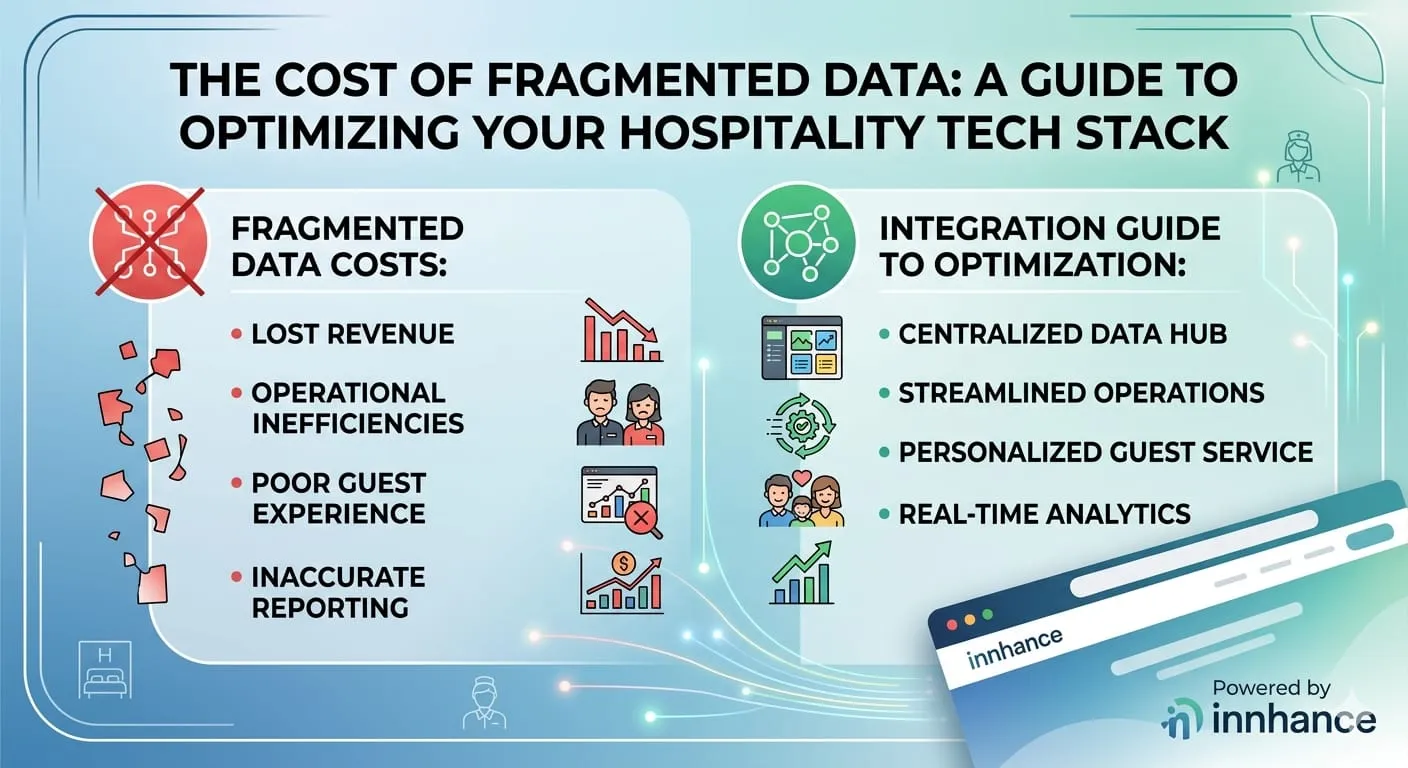
What separates an experiential brand that consistently runs at an 85% occupancy rate from one struggling to break 50% often comes down to data structure. Many operators run their businesses on a collection of disconnected software applications. They have a property management system, a standalone channel manager, a third-party ticketing tool, and a completely isolated guest messaging platform.
When your business software programs cannot communicate with each other automatically, your business experiences operational friction, revenue leaks, and a fractured guest experience.
The strategy for 2026 is clear. To build a scalable experience business, you must move away from isolated software applications and transition toward an open, unified intelligence platform. This technical guide outlines how to audit, integrate, and optimize your guest operations stack to maximize your revenue per available unit.
What is Hospitality Tech Stack Integration?
Direct Definition: Hospitality tech stack integration is the process of connecting your core business systems (including booking engines, property management tools, revenue systems, and communication channels) into a single, synchronized data layer via open APIs (Application Programming Interfaces).
In a traditional setup, information is locked inside individual software applications. When a travel agent books a tour or a guest reserves a hotel room through an online platform, that data must often be manually typed into an internal calendar.
In a unified ecosystem, that booking instantly triggers an automated sequence across your entire business: your inventory updates everywhere, targeted pre-arrival messages are scheduled, and staff schedules adjust automatically based on real-time operational demand.
Step-by-Step Architecture for a Unified Guest Journey
Building a highly efficient operations stack requires structural planning. Order matters because each layer of data directly feeds the next.
1. Conduct a Siloed Software Audit: Phase 1: Discovery.
Map out every single digital tool your team uses to interact with guests or manage assets. Identify where data must be manually copied from one screen to another. These manual steps are your primary operational bottlenecks.
2. Establish an Open API Data Layer: Phase 2: Integration.
Transition away from legacy systems that restrict your data. Prioritize modern platforms built with open architecture frameworks. This allows your scheduling, ticketing, and property management systems to sync without custom development friction.
3. Deploy Centralized Dynamic Pricing Controls: Phase 3: Revenue Optimization.
Connect your inventory directly to an automated revenue engine. Instead of manually altering prices for weekend rushes or seasonal shifts, let your platform automatically adjust rates across all booking channels based on real-time occupancy.
4. Activate Autonomous Guest Relationship Workflows: Phase 4: Communication.
Link your booking data straight to automated messaging platforms like WhatsApp. The moment a transaction is confirmed, the system should instantly take over the communication timeline, handling confirmation details, check-in logistics, and targeted upgrades.
Measuring the Financial Impact of Unified Operations
Investing in tech stack integration delivers clear operational returns. When systems talk to each other, administrative workloads drop, and direct revenue opportunities increase.
The performance metrics below illustrate the direct shift from fragmented systems to an integrated platform like Innhance.
| Core Operational Area | Fragmented Stack (Manual Operations) | Integrated Stack (Innhance Platform) |
|---|---|---|
| Data Sync Frequency | Batch updates or manual entry (hours of delay) | Instant, real-time cross-platform updates |
| Direct Booking Leakage | High dependency on high-commission agency platforms | High conversion via automated direct communication |
| Staff Utilization | Hours spent daily on repetitive administrative entry | Focused entirely on guest satisfaction and service |
| Average Response Delay | 30 minutes to multiple hours | Under 60 seconds via automated conversational tools |
Crucial Integration Challenges (and How to Solve Them)
The Problem with Rigid Legacy Platforms
Many older software applications lock your data inside their ecosystem, forcing you to buy their expensive add-on modules rather than choosing the tools that actually serve your team best.
- The Resolution: When Evaluating Software Vendors, Check Their Documentation For Open APIs. If A Provider Charges Extra Fees Just To Let You Connect To Other Tools, Look For A Modern, Open-architecture Alternative.
Overcoming Internal Staff Resistance
Introducing new software can sometimes disrupt daily routines, causing your team to slip back into manual habits out of simple familiarity.
- The Resolution: Choose Platforms That Prioritize Simple, User-friendly Dashboards Over Complex Technical Menus. When Your Frontline Staff Sees That An Integrated System Handles Their Daily Updates Automatically, Software Adoption Happens Naturally.
Scale Your Operations with Innhance
Managing a modern travel, hospitality, or experience business with disconnected software applications limits your growth potential. It drains your staff's energy, leaves easy revenue on the table, and creates unnecessary friction for your visitors.
Innhance provides the open, unified infrastructure you need to connect your entire operational footprint. Our platform brings your bookings, dynamic pricing, and guest communications into one clear dashboard.